
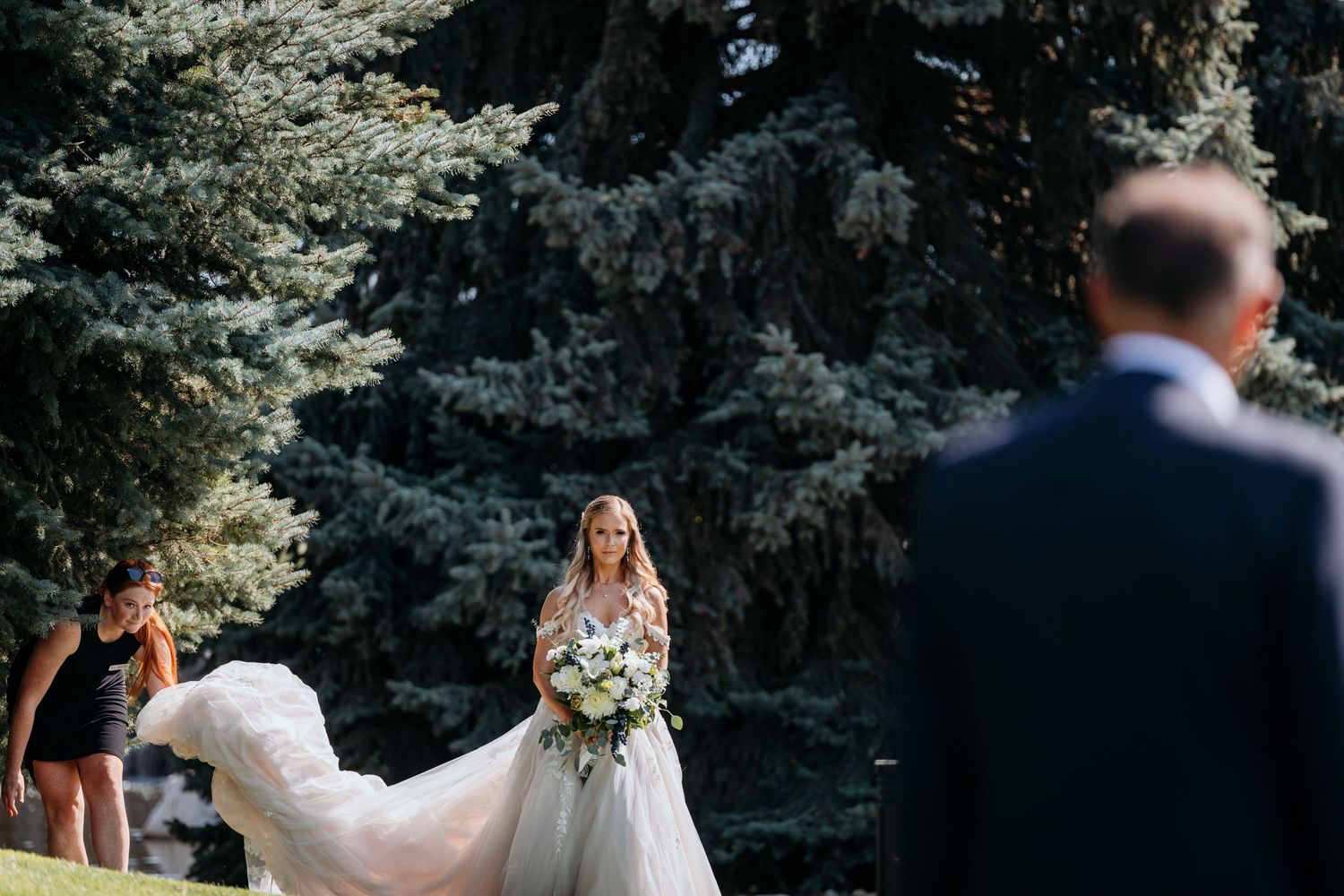
After twenty years as a wedding photographer, I’ve come to appreciate that couples don’t always understand what goes into creating exceptional wedding photographs. They see the photographer arrive with a camera, take pictures throughout the day, and eventually deliver a gallery of images. What they don’t necessarily see is the preparation, equipment, experience, technical knowledge, creative judgment, and mental energy required to do the job well.
So, should a wedding photographer cost more or less than a wedding planner?
My answer is that it depends on the couple’s priorities. However, I believe there are compelling reasons why wedding photography deserves a substantial place in the wedding budget, and why couples should think carefully about the relationship between their photographer and their planner.
1. The costs of wedding photography begin long before the wedding
One of the first things couples should understand is that a professional wedding photographer has significant expenses before ever photographing a wedding.
Professional camera bodies, lenses, lighting equipment, memory cards, computers, storage systems, and editing software are essential tools of the trade. Equipment needs to be maintained, replaced, and upgraded. Some items require updating every year to ensure that I can continue working reliably and efficiently.
But the financial investment is only part of the story.
I spend considerable time scouting locations at different times of day to understand how the light behaves. A beautiful location at midday can look entirely different in the late afternoon or under an overcast sky. Knowing where to position a couple, which direction they should face, and when the light will be most flattering can make an enormous difference to the final images.
That knowledge isn't acquired by purchasing expensive equipment. It comes from experience.
A photographer with twenty years in the industry has had thousands of opportunities to learn what works, what doesn't, and what can go wrong. The value of that experience is difficult to measure on an invoice, but it is very real.
2. Taking photographs is only one part of being a photographer
A common misconception is that wedding photography consists primarily of taking pictures on the wedding day.
In reality, the work involves anticipating moments before they happen, understanding the flow of a wedding, managing time, interacting with people, making rapid creative decisions, and knowing when to intervene and when to remain invisible.
Knowing when not to photograph something is just as important as knowing when to press the shutter.
An experienced photographer learns to recognize the moments that deserve attention and those that are better left undisturbed. They know how to work quickly without making people feel rushed, how to put nervous couples at ease, and how to get the photographs they need without turning the wedding into a prolonged photo session.
Then comes the work after the wedding: reviewing thousands of images, selecting the strongest photographs, editing them consistently, organizing the gallery, and delivering the finished collection.
The couple may spend eight hours with their photographer on the wedding day, but the photographer's work extends well beyond those eight hours.
When comparing photography and planning fees, it is important to consider the entire service, not simply the visible hours on the wedding day.
3. A wedding planner and a wedding photographer have different responsibilities
Wedding planners perform an important job. They coordinate vendors, manage logistics, organize schedules, and help ensure that the wedding unfolds as intended.
Photographers have a different responsibility: creating a lasting visual record of the day.
Although these roles should complement one another, they can sometimes come into conflict.
In my experience, a wedding planner's schedule can occasionally make it more difficult for a photographer to produce the best possible images. I have photographed couples in unflattering locations and difficult lighting conditions because the planner's decisions left little room for alternatives.
The problem is not that planners should never influence the schedule or location. Their responsibilities are considerable, and a wedding has many moving parts.
The problem arises when decisions affecting the photographs are made without considering the photographic consequences.
A few minutes spent discussing lighting, positioning, and timing before the wedding can prevent compromises that cannot easily be corrected afterwards.
A planner may be responsible for ensuring that the ceremony runs on time. A photographer needs to understand how that timing affects the images. Both perspectives matter, but they are not interchangeable.
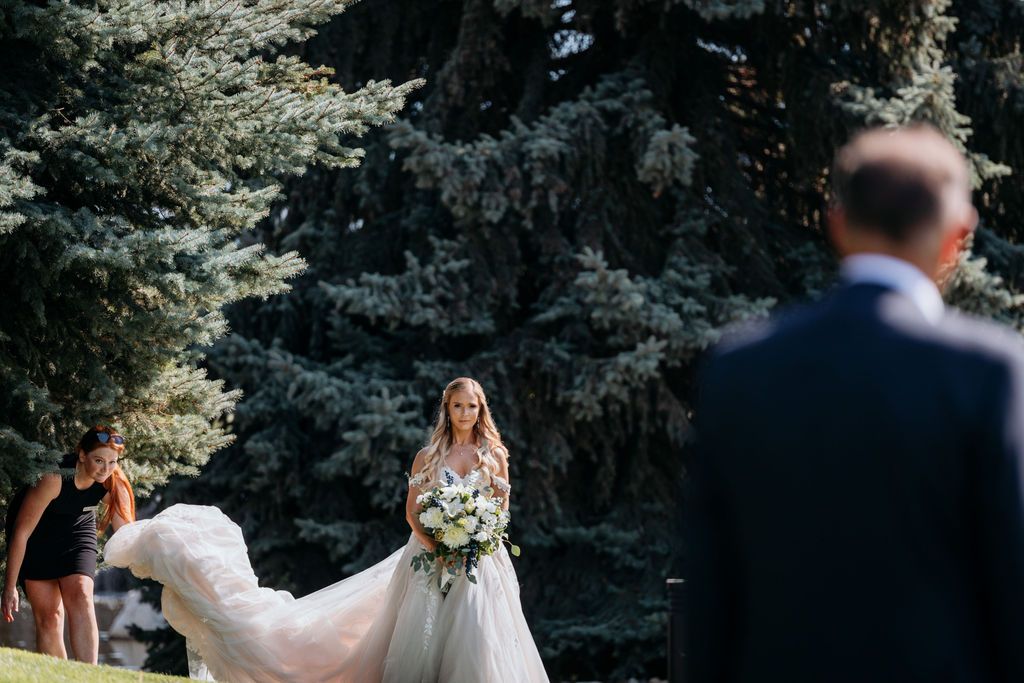
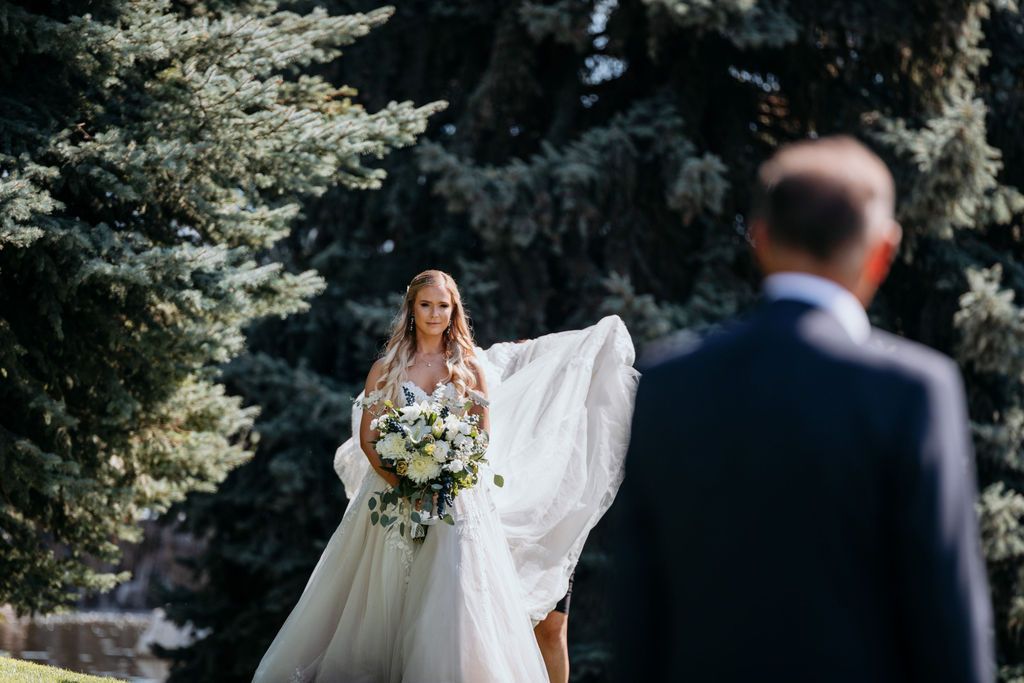
4. When a wedding planner becomes part of the photograph
One recurring problem I have encountered is a wedding planner standing in a prominent position during the ceremony, blocking or distracting from the bride and groom.
An especially frustrating example is when a planner escorts the bride down the aisle while holding her dress for the entire walk.
Consider the photographs that moment is supposed to produce. They may tell the story of a bride walking toward her future spouse, accompanied by her father. The images carry emotional significance and may become some of the most treasured photographs from the wedding.
When a planner enters that visual story unnecessarily, the photographs can become something quite different from what the couple imagined.
I have lost count of the number of times I have been asked to remove a wedding planner from photographs during editing.
Of course, there are situations where a planner's assistance is necessary. A dress may need help navigating stairs, for example, or a particular venue may present practical challenges. There is nothing wrong with helping when help is genuinely needed.
But there is a difference between assisting the wedding and becoming a prominent part of its visual record.
Couples should discuss these details with their photographer and planner beforehand. Who will accompany the bride down the aisle? Where will the planner stand during the ceremony? Will the photographer have unobstructed views of the important moments?
These questions may seem minor during wedding planning, but they can have a lasting impact on the photographs.
5. Why the photographer's experience matters when decisions are made
During a ceremony rehearsal, I sometimes find myself wondering why couples defer to their wedding planner on photographic matters rather than listening to the person responsible for producing the photographs.
A planner may have coordinated dozens of weddings, but that does not automatically make them an expert in lighting, camera angles, visual composition, or the practical challenges of photographing a ceremony.
A photographer's recommendations are based on a particular set of professional skills. If I suggest moving a couple a few feet, changing their orientation, or adjusting the ceremony setup, there is usually a photographic reason behind that advice.
Perhaps the proposed position creates harsh shadows. Perhaps a background element is distracting. Perhaps the current arrangement will prevent me from capturing a clear view of an important moment.
When that advice is overruled, I still have to work with the result. I am still responsible for delivering the photographs, even if the conditions make the best possible outcome more difficult to achieve.
There is also a mental cost to this situation. Wedding photography requires sustained concentration, rapid decisions, and creative problem-solving. Having to work against avoidable obstacles while another professional dictates photographic decisions, adds unnecessary pressure.
My view is straightforward: if a decision directly affects the quality of the photographs, the photographer's expertise should carry significant weight.
That doesn't mean the photographer should control every aspect of the wedding. It means each professional should be trusted to contribute their expertise in the area where it matters most.
6. Could a photographer step in and plan a wedding?
I sometimes consider a simple hypothetical.
If a wedding planner cancelled at the last minute, could I, as a photographer with twenty years of experience, step in and organize the wedding?
I believe I could manage many of the responsibilities involved, particularly with the help of the couple and the other vendors.
Now consider the reverse. If the wedding photographer cancelled at the last minute, could the planner step in and photograph the wedding to a professional standard?
I don't believe so.
Wedding photography requires specialized technical skills, extensive equipment, an understanding of light, and the ability to work quickly under pressure. It also requires an exceptional level of interpersonal awareness.
A photographer must interact with different personalities, earn people's trust, recognize fleeting moments, and obtain the necessary images without disrupting the wedding. All of this must happen in real time. Once a moment has passed, it cannot simply be recreated.
This comparison isn't intended to suggest that planning is easy or that a planner's work has little value. Planning and photography are different professions with different skill requirements.
Rather, it highlights how difficult it is to substitute one professional for another. The specialized nature of photography is one reason couples should be careful not to underestimate its value.
7. So, should a wedding photographer cost more than a wedding planner?
There is no universal answer.
Fees vary according to experience, location, business costs, the scope of the service, and the complexity of the wedding. A planner coordinating a large, multi-day destination wedding may have an enormous workload. An experienced photographer producing a comprehensive collection of images may also invest many hours before, during, and after the event.
Comparing the two prices without understanding what each service includes is not particularly useful.
However, I believe couples should recognize that professional photography has substantial costs, much of which are incurred before the wedding is booked. The equipment, maintenance, software, technical expertise, and years spent developing professional judgment all contribute to the price.
I also believe that if a photographer were to invest the same amount of energy and expense as a wedding planner, without developing the specialized skills required to make exceptional images, the resulting photographs would not necessarily be worth much.
The value of photography isn't determined by how busy the photographer appears to be. It is determined by the quality of the work, the reliability of the service, the experience behind the decisions, and the importance of the resulting images to the couple.
Ultimately, couples should pay for the services they value most. If having beautiful, meaningful photographs is a high priority, it makes sense to invest accordingly rather than treating photography as an expense to minimize after the other arrangements have been made.
8. Decide what matters most before you book your vendors
When I first meet with a couple, I present them with a list of things they might encounter or value during their wedding. I ask them to number these items in ascending order of priority.
The exercise encourages couples to think carefully about what matters most to them rather than simply following convention or allocating their budget according to what other couples have done.
For some, the priority may be an elaborate reception, an exceptional dining experience, or a meticulously coordinated event. For others, it may be the photographs that will preserve the memories of the day for decades.
If photography ranks highly on a couple's list, I offer advice about how to achieve the best possible images.
Sometimes that advice means reconsidering a ceremony location, adjusting the schedule, allowing more time for portraits, or changing where people stand. Occasionally, it means limiting the wedding planner's role in decisions that directly affect the photography.
That may sound controversial, but it follows a simple principle: the decisions made during wedding planning should reflect the couple's priorities.
If photography is one of those priorities, its requirements need to be considered from the beginning, not accommodated as an afterthought.
9. How to help your photographer and planner work together
Couples shouldn't have to choose between a good planner and a good photographer. Ideally, the two professionals collaborate to create a wedding that runs smoothly and produces beautiful images.
Here are a few practical steps that can help:
• Discuss priorities early. Tell both professionals what matters most to you and where you are prepared to be flexible.
• Include the photographer in ceremony planning. Review the location, lighting, sight-lines, and positioning during the rehearsal.
• Agree on the photographer's working space. Establish where the planner and other vendors can stand without obstructing important photographs.
• Build a realistic timeline. Allow sufficient time for portraits, family photographs, and changes in lighting or weather.
• Respect each professional's expertise. The planner should manage logistics in consultation with the photographer when those decisions affect the images.
• Resolve disagreements before the wedding day. The ceremony is not the time to discover that two vendors have very different ideas about how things should be done.
These steps don't diminish the planner's role. They help ensure that planning decisions support the couple's goals, including the quality of the final photographs.
The final word
Should a wedding photographer cost more or less than a wedding planner?
I would encourage couples to ask a more useful question: What matters most to us, and what level of investment is appropriate for that priority?
After twenty years as a wedding photographer, I know that producing exceptional images involves far more than owning a camera and showing up on the day. It requires technical knowledge, preparation, experience, creativity, interpersonal skill, and the ability to make the right decisions in moments that cannot be repeated.
Wedding planners and photographers contribute different kinds of value. Neither service should be judged by price alone, and neither professional can simply replace the other.
But if photography is one of your highest priorities, choose your photographer accordingly, listen to their advice about the conditions required for great images, and make sure your planner understands that those recommendations matter.
The wedding itself lasts a day. The photographs may be treasured for generations.
That is worth considering when deciding how to allocate your wedding budget.
Wedding Planners with Whom I Enjoy Working
https://www.daybyknightevents.com/